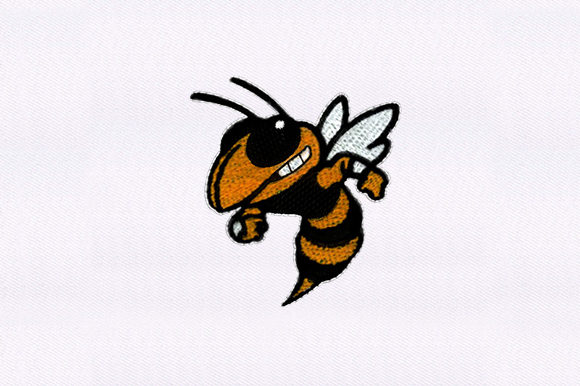
A Design Review of the Honey Bee Insect Embroidery
As an embroidery designer who works daily with small business branding, I’m always evaluating digital embroidery files for their professional potential. Today, I’m reviewing the Honey Bee Insect machine embroidery design from the perspective of a business creating branded merchandise. Let’s see if this "quirky" design from the Bugs category can translate into effective commercial embroidery.
First Impression: A Friendly, Playful Brand Symbol
The product description calls this a quirky embroidery that will look amazing on fabric. That’s a good start. For a business, especially in cafes, bakeries, florists, or boutique shops, a honey bee motif can immediately convey themes of community, hard work, nature, and sweetness. The design’s visual personality leans toward playful and handmade, but with a high-quality execution, it could easily feel professional and rustic.
This first impression is crucial. When a customer sees an embroidered logo on a staff apron or a tote bag, that initial feeling of friendliness and quality builds trust. The Honey Bee Insect isn’t overly corporate; it’s approachable. That’s a significant asset for a local business wanting to connect with its community.
Real-World Business Applications for Honey Bee Insect
Let’s walk through some concrete scenarios where this embroidery file could become a valuable brand asset.
Embroidered Patches for Product Labels and Merchandise
A small handmade shop or an Etsy seller could use the Honey Bee Insect as an embroidered patch sewn onto product packaging, garment tags, or as a standalone piece of merchandise. This adds a tangible, premium feel to a handmade product. For a pet brand selling natural goods or a creative studio, a bee patch signals care and craft.
Staff Uniforms and Aprons
Imagine a café with this design embroidered on the chest of a polo shirt or centrally on an apron. It creates a consistent, recognizable look for staff. The design’s likely detail—wings, body segments—needs to be evaluated for size. Will it remain clear and intact when stitched at, say, 2 inches wide on a uniform? That’s a key question.
Cap Embroidery and Tote Bag Branding
For event merch or customer gifts, a honey bee on a cap front or a tote bag is a charming accent. On curved surfaces like caps, the design’s stitch density and outline must be robust. On tote bags, the textured fabric requires the right stabilizer to ensure the bee doesn’t distort.
Product Packaging Accents and Boutique Merch
Beyond apparel, small businesses can use embroidery to elevate simple items. A bee embroidered onto a linen pouch, a tea towel, or a simple canvas bag turns a generic item into branded merchandise. This enhances product value and visual consistency across your offerings.
Where to Use Honey Bee Insect with Care
Not every application is straightforward. Here are points a professional must consider.
- Small Patch Sizes: If you need a very small patch (under 1.5 inches) for a product label, test the file first. Detailed insect outlines might blur or fill in at tiny scales.
- Cap Fronts and Curved Surfaces: The design’s balance is important here. A very asymmetrical or dense design might not hoop well on a curved cap front.
- Dark Uniforms and Thread Contrast: On dark fabrics like black work shirts, you must plan thread colors carefully. A yellow bee body on black needs a bold outline or a switch to a higher-contrast color palette to remain visible.
- Items Requiring Frequent Washing: For aprons or uniforms that see heavy use, a design with very high stitch density might be less durable. A simpler, cleaner version of the bee could be more practical.
The Impact on Brand Identity and Customer Engagement
Using the Honey Bee Insect consistently across your custom apparel and products does more than decorate; it builds your brand identity. A recognizable, well-executed emblem fosters customer recognition. It signals that you invest in the details, boosting perceived professionalism. For a craft business or digital embroidery file buyer, offering products with this embroidered touch can directly increase buyer engagement—they see the care you put into presentation.
It’s also a versatile design asset. You could use it as a primary logo accent or a secondary decorative element on different items, maintaining a cohesive brand story without being repetitive.
Practical Embroidery Designer Notes for Production
Before running this for any commercial embroidery project, here is my standard checklist.
- Test in Black and White First: Stitch a sample on both light and dark fabric scraps. This reveals how the design reads without color, testing its fundamental shape and density.
- Check Function at Small Patch Size: Hoop it at your intended smallest size (e.g., for a product label) to ensure clarity.
- Review Thread Color Contrast: Select threads that pop on your target fabrics. Consider a mock-up for client approval.
- Inspect Spacing and Hoop Size: Confirm the required hoop size with the file details. Ensure elements aren’t too close to the edge for stable hooping.
- Test on Real Target Fabric: Don’t guess. Stitch it on a sample of the actual apron, cap, or tote bag material, using the proper stabilizer.
- Create a Printable Mockup: For client presentations, a digital mockup of the bee on a shirt or bag helps visualize the finished product.
- Compare Beside Other Brand Assets: See how the embroidered bee looks next to your printed logos or website graphics for visual harmony.
- Confirm Commercial Licensing: The product description doesn’t specify license terms. Always verify that the digital embroidery file is cleared for business and commercial use before production.
In summary, the Honey Bee Insect machine embroidery design presents a strong opportunity for small businesses seeking a friendly, nature-inspired brand symbol. Its potential for patches, uniforms, and merchandise is significant, provided it is tested rigorously for each specific application. By following professional embroidery practices, this quirky bee can become a polished, trusted emblem of your brand’s hard work and community focus.