A Designer's Review: Working with the Mandala Crab Embroidery
The First Impression: Intricate Charm
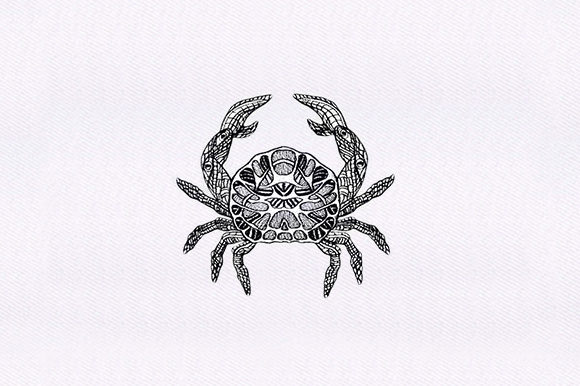
When I first opened the Mandala Crab embroidery file, my immediate thought was "this is a character." It's not just a crab, and it's not just a mandala; it's a playful fusion that manages to feel both sacred and whimsical. The symmetrical, circular layout typical of mandala designs gives it a balanced, intentional feel, while the central crab motif injects a dose of personality. This isn't a generic floral or geometric pattern—it has a visual personality. That personality, for me, suggests projects aimed at someone with a specific taste: perhaps a beach-loving individual, a fan of unique animal art, or someone who appreciates a design that tells a little story. The detail level appears intricate, which promises a rich finished product, but also prompts careful consideration of scale and fabric.
The Natural Habitat for This Design
This design naturally belongs on items where that personality can shine. I visualized it immediately on a high-quality canvas tote bag for a boutique—it feels artisanal and special. It would be a stunning focal point on the back of a cotton sweatshirt, transforming a basic garment into a statement piece. For a smaller, more delicate application, consider a baby's organic cotton blanket or a nursery pillow cover; the mandala's harmony paired with the friendly crab creates a gentle, engaging decor. As an embroidered patch, it would be exceptional, allowing for application on anything from a backpack to a denim jacket. Its uniqueness makes it a strong candidate for personalized gifts, like a custom apron for a chef who loves the coast or a tea towel for a beach house kitchen.
Performance in Real Project Scenarios
In practical use, the Mandala Crab's intricate nature means stitch density will be a key factor. On a mid-weight cotton tote bag or a sturdy apron, the dense fill stitches of the mandala background will lay down beautifully, creating a luxurious, textured look that adds significant perceived value. On a t-shirt or lighter sweatshirt, using a robust stabilizer is paramount to prevent puckering and maintain the design's crispness. I would be cautious with very stretchy fabrics unless the design is scaled down considerably; those detailed, satin stitch borders need a stable foundation.
For caps or curved surfaces, the perfect circular symmetry might require some adaptation in hooping technique, but the central motif is strong enough that even if the outer details slightly distort on the curve, the crab itself will remain the clear hero. On dark fabrics, this design will truly pop, but thread color choice becomes critical—bright, contrasting threads will make every spiral and leg detail sing. Imagine this on a black denim jacket as a patch: it would be breathtaking.
Where to Exercise Caution
My designer instinct flags a few areas for extra attention. Firstly, scale. This isn't a design I'd automatically try in a very small hoop size. The intricacy risks becoming muddy if compressed too much; it needs space to breathe so all its details maintain clarity. Secondly, fabrics with a pronounced texture, like a heavily napped blanket or a loose-weave linen, might swallow some of the finer running stitch details. A test stitch on a scrap of your actual project fabric is non-negotiable here. Lastly, for products destined for frequent, heavy washing—like kitchen towels or everyday baby clothes—the longevity of such a detailed, potentially dense design depends heavily on quality thread and proper stabilizer use during the embroidery process.
The Impact on Your Business and Clients
From a commercial perspective, the Mandala Crab is a design that elevates. For an Etsy seller or small shop owner, offering this on a ready-made product like a tote or pillow cover immediately signals a higher tier of handmade craftsmanship. It’s not a quick, simple logo; it’s art. This builds customer trust and engagement—buyers recognize the effort and uniqueness. It enhances brand consistency for a business with a coastal, artistic, or mystical vibe. As a gift, it feels thoughtfully chosen and specially made, increasing its "giftability" immensely.
For apparel decorators, it offers a way to provide a truly custom piece that stands out from mass-produced offerings. The finished product has a professional, designer feel that can command a higher price point. In digital product previews and printable mockups for those selling the embroidery file itself, its visual complexity showcases beautifully, suggesting a valuable design asset for other makers.
Practical Designer Notes Before You Hoop
- Always stitch this design out on a scrap of your intended project fabric first. This is your only way to truly gauge stitch density, thread coverage, and how the small details render.
- Experiment with thread color palettes on both light and dark background mockups. A monochromatic scheme could be elegant, while a vibrant, multi-color approach could be joyful.
- Confirm the appropriate hoop size for your desired final size. Intricacy needs space.
- Inspect the file preview closely for any tiny, isolated satin stitch elements that might require perfect tension to look sharp.
- Match your stabilizer to the fabric weight and stretch. This design demands a stable canvas.
- If using for commercial projects or selling finished items, verify the licensing terms of the embroidery file to ensure your use is compliant.
- Consider its versatility: it could be a stunning focal point on a single product, or a repeating element on a series of boutique items like a set of kitchen towels.
A Design That Invites Creativity
The Mandala Crab isn't a passive design you simply stitch and sell. It invites you, as a maker, to make decisions. It asks you to choose the perfect fabric backdrop, the ideal thread colors to highlight its mandala layers or its crab features, and the most suitable product to carry its character. That engagement is its greatest strength. It feels less like a generic download and more like a collaborative design asset. Whether you're preparing a custom holiday gift, adding a new product line to your craft business, or simply creating a special item for yourself, working with this design is a project that requires thought and rewards it with a distinctive, beautiful finished product.