Hug: Why This Minimalistic Design Resonates
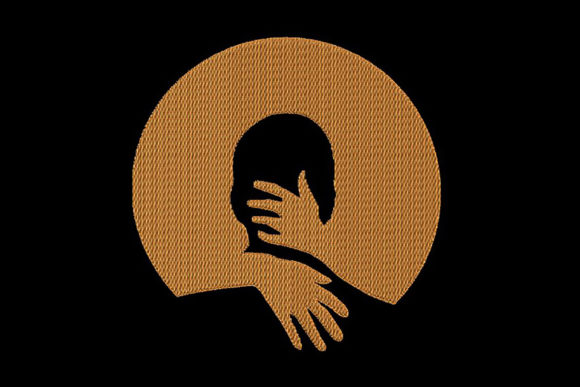
When a new embroidery file lands on my desk, my first question is always: where does this design live in the real world? It’s not about the digital preview on a screen; it’s about the tactile impression it will leave once stitched into fabric. So, when I look at ‘Hug, Minimalistic’, I immediately envision a simple, warm shape—likely a single-line embrace rendered in a clean, open style. The mood is unambiguous: gentle, affectionate, and quietly optimistic. Its visual personality is one of understated comfort, which tells me it belongs to projects where the message is meant to feel personal, not loud.
The Perfect Project Match: Where This Hug Finds a Home
This is a design that begs to be used. Its one-color simplicity isn’t a limitation; it’s a strategic advantage. I’m picturing it stitched in a warm shade of yellow or orange thread on a dark cotton tote bag—a standout gift for a friend. Or, imagine it anchoring the corner of a linen pillow cover in a nursery, offering a soft visual promise. For a small shop owner, this could become a signature element on apron pockets or the cuff of a cozy sweatshirt, creating recognizable, brand-consistent merchandise without overwhelming the garment. The ‘minimalistic’ approach means it integrates seamlessly, becoming part of the product’s texture rather than a bulky decoration.
For Etsy sellers and craft business owners, designs like this are gold. They translate beautifully into printable mockups for digital product listings, and the finished product has a handmade presentation that feels intentional and professional. A customer receiving a personalized tea towel or a baby blanket with this emblem isn’t just getting a decoration; they’re receiving a sentiment. That directly impacts product value and giftability. The clarity of a single-color, open design also fosters customer trust—it looks clean, durable, and well-made.
Navigating the Stitch: Practical Considerations for Success
The product description suggests it works best with a warm thread on dark fabric. That’s a crucial note. On a light background, a yellow or orange satin stitch or running stitch might lose its vibrancy. I’d always test the chosen thread color on a scrap of the actual project fabric first. Contrast is everything for a minimalistic design; without it, the ‘Hug’ could vanish.
Since detail level seems low with a one-color approach, stitch density should be manageable, making it a friendly choice for thinner fabrics like t-shirts or delicate baby clothes, provided you use the correct stabilizer. However, the advice to use it on dark fabric makes me think of potential applications on caps or hats—curved surfaces that require careful hooping. Always confirm the compatible hoop size with the file before starting, as an improperly sized hoop can distort even the simplest shapes.
For textured fabrics like some sweaters or blankets, a clean-running stitch design like this can actually perform better than dense fill stitch patterns, as it won’t sink into the weave. But be mindful of very stretchy fabrics; even minimal designs need adequate stabilization to prevent puckering.
A Design for the Maker’s Mindset: Pre-Project Checklist
Before I’d load this machine embroidery design for a client’s custom apparel project or my own small shop product, my routine is consistent. First, I stitch it out on a scrap of the intended fabric—a dark scrap, as suggested. This reveals everything: how the thread color truly pops, whether any tiny corners or connections in the design are clean, and how the fabric handles the stitches. I then look at it in both natural and artificial light, as a product might be viewed in a home or a boutique.
I also consider its application in both personal and commercial projects. The description doesn’t specify licensing, so that’s a step I cannot skip. If I’m an apparel decorator or a digital product seller intending to use this as a design asset for commercial embroidery, I must confirm the license terms before selling any finished product. This protects my business and respects the designer.
Finally, I think about longevity. Will this ‘Hug’ hold up on a kitchen towel that sees frequent washing? A minimalistic design with fewer stitches often fares better here than dense, intricate work, but using quality thread and secure stitching techniques is non-negotiable. For a patch that might be applied to a backpack, the open layout likely makes it less prone to snagging.
The Unspoken Impact: Why Simple Designs Engage Buyers
In my experience, designs like ‘Hug, Minimalistic’ often garner a more engaged reaction than complex ones. They are approachable. A crafter sees it and immediately imagines stitching it. A buyer at a craft fair sees it on a tote and understands the emotion instantly—there’s no decoding needed. This speeds up the connection, which is vital for handmade sales. For holiday gifts or wedding gifts, this simplicity becomes elegance. It doesn’t shout; it whispers, which can be far more powerful.
It also offers flexibility for the maker. You can scale it (within the limits of its one-size file) for different areas without losing its essence. Placed small on a cap, it’s a subtle accent. Enlarged on a pillow cover, it becomes a central, calming motif. This adaptability makes it a worthwhile digital embroidery file for creative entrepreneurs who cater to diverse markets.
So, if you’re a maker, a hobbyist, or a small business owner looking at ‘Hug, Minimalistic’, see it not just as an embroidery design, but as a design for an experience. Its real value emerges not in the file, but in the thoughtful application—on that dark fabric with the perfectly chosen warm thread, stitched with care, and given to someone who needs that quiet, embroidered embrace.